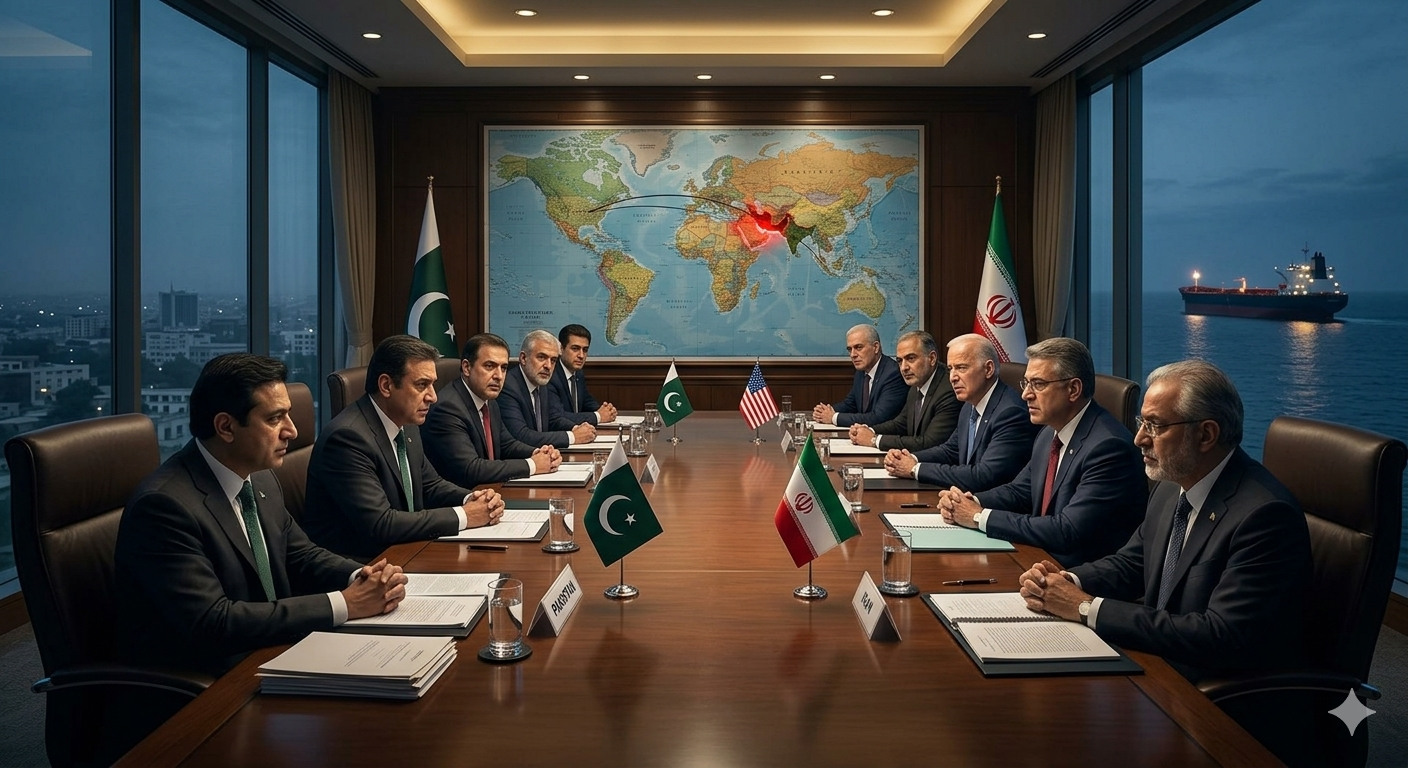
A ceasefire that could expire any hour. A vice president boarding a plane to Pakistan. And a cargo ship seized at gunpoint in the Gulf of Oman. If you haven’t been following the Iran war updates closely, now’s the time to catch up. Things are moving fast — and the next 48 hours could decide whether this conflict restarts or takes a step toward peace. Here’s everything you need to know right now.
What Is the Current Status of US-Iran Peace Talks?
Right now, the US-Iran peace talks are hanging by a thread. Vice President JD Vance Pakistan trip is expected today, with top US officials traveling to Islamabad for a second round of negotiations. The talks are planned for Wednesday. But here’s the catch — Iran’s Foreign Ministry hasn’t officially confirmed it’s showing up. That uncertainty is making everyone nervous.
Trump pushed the US-Iran ceasefire deadline to Wednesday evening ET. He said it’s “highly unlikely” he extends it further without progress. The Islamabad peace talks 2026 represent the best shot at avoiding a return to full-scale conflict. Still, Iran’s chief negotiator Mohammad Ghalibaf publicly said his country won’t negotiate under threat. Both sides are talking tough — but quietly, diplomats keep the door cracked open.
| Factor | Current Status |
| Ceasefire | Active — expires Wednesday ET |
| Talks Location | Islamabad, Pakistan |
| US Lead | JD Vance + Steve Witkoff + Jared Kushner |
| Iran’s Position | Resistant — no formal confirmation |
| Trump’s Stance | Deal expected relatively quickly |
3 Key Sticking Points in Any US-Iran Deal
The Iran uranium stockpile deal is the biggest hurdle. Iran sits on around 400 kilograms of 60% enriched uranium. Trump claimed last week that Tehran agreed to hand it over to the US — Iran shot that down immediately, calling it a “non-starter.” One proposal on the table involves unfreezing over $20 billion in Iranian assets in exchange for the stockpile. Iran wants that money. But giving up its uranium is a different story.
The Iran enrichment program suspension is the second fight. The US proposed a 20-year pause on enrichment. Iran countered with 5 years — and the US rejected that outright. The third sticking point is the Strait of Hormuz. Iran reopened it briefly last Friday then slammed it shut again within hours. Until these three issues get resolved, any Trump Iran deal remains more wish than reality.
| Issue | US Position | Iran Position |
| Uranium Stockpile | Ship it to the US | Non-starter, will not agree |
| Enrichment Pause | 20-year suspension | 5-year suspension only |
| Sanctions Relief | After full deal signed | Must come before talks progress |
| Strait of Hormuz | Full reopening required | Control stays with Iran |
The Strait of Hormuz Crisis — What’s Really at Stake
Here’s a number that should stop you cold. On Monday, only 16 ships crossed the Strait of Hormuz. On a normal day, that number is in the hundreds. The Strait of Hormuz shipping crisis has effectively choked off a critical artery of the global energy supply. About 20% of the world’s oil passes through this narrow channel. When it closes, everyone feels it — from fuel pumps in Ohio to airline tickets in Texas.
Iran briefly declared the waterway open last Friday. Markets exhaled. Then the IRGC reversed the decision within hours and reinstated full control. Now, every ship wanting to pass through needs Tehran’s permission. Two vessels reported attacks over the weekend trying to transit without it. The Iran war updates around Hormuz change daily — and until a deal is struck, this chokehold on global trade isn’t going anywhere.
US Blockade of Iranian Ports — Everything You Need to Know
Trump made it crystal clear: the US naval blockade Iran stays in place until a signed deal exists. On Sunday, the US Navy fired on and seized the Iranian-flagged cargo ship Touska in the Gulf of Oman after it tried to push through the blockade. US Marines rappelled from helicopters onto the deck. The whole thing was caught on video. The Iran cargo ship seized incident has become the flashpoint that could either push both sides to the table — or blow talks up entirely.
Iran’s Foreign Ministry called the seizure “criminal” and “extremely dangerous.” The head of Iran’s judiciary, Gholamhossein Mohseni Ejei, said Iran must maintain “100% readiness” for more attacks and vowed a response. He called the blockade a clear US-Iran ceasefire violation. Iran placed full responsibility for any future escalation squarely on Washington. The tension around this single ship seizure captures the whole fragility of the current situation.
Iran’s Response — Negotiations or Resistance?
Iran is sending mixed signals — and that’s exactly the point. Publicly, top officials are talking resistance. Ghalibaf said the US wants to turn peace talks into a “table of surrender.” He warned Iran has “new cards on the battlefield” ready to play. That’s the kind of language designed for domestic audiences at home — not for diplomats in Islamabad. The Iran war negotiations picture looks bleak on the surface but stays alive underneath.
Inside Iran, the regime is cracking down hard on any dissent. Rights groups report arrests, forced confessions, and executions targeting people who protested against the war or the government. That level of internal pressure tells you the regime feels threatened from within — not just from US bombs. Whether Iran shows up to the second round of US Iran talks or not, Tehran is fighting on two fronts: the negotiating table and its own streets.
How the Iran War Is Affecting Global Oil and Fuel Prices
Brent crude is sitting at $95.1 per barrel — down slightly on Tuesday as markets dared to hope the US-Iran peace talks might produce something. WTI dropped to $86.9. Jefferies economist Mohit Kumar summed it up well: markets are in “wait and watch” mode. Nobody wants to make a big move until they see what comes out of Islamabad. But if talks collapse and the Strait stays shut, analysts say $110 per barrel is a real possibility.
The pain isn’t just at the gas pump. Airlines are now facing a serious jet fuel shortage tied directly to the Strait of Hormuz shipping crisis. US low-cost carriers have already filed for temporary tax relief to cope with soaring costs. Summer travel is at risk. The US Iran ceasefire deadline this Wednesday isn’t just a political moment — it’s an economic one. Every extra day this conflict drags on costs the global economy billions.
| Commodity | Current Price | Change |
| Brent Crude | $95.1 per barrel | -0.4% on Tuesday |
| WTI Crude | $86.9 per barrel | -0.6% on Tuesday |
| Jet Fuel | Shortage reported | Airlines seeking tax relief |
| South Korea KOSPI | Up 2.72% | AI chip optimism boost |
Israel, Lebanon and the Wider Regional Impact
The Iran war isn’t contained. It never was. Israel has carried out strikes in southern Gaza and Lebanon, with at least 2,387 people killed in Lebanon since the latest round of conflict began. An Israeli drone strike killed two people in southern Gaza this week alone. A second round of Israel-Lebanon direct talks is scheduled for Thursday in Washington — a rare diplomatic move that Lebanon pushed forward by appointing a new representative, specifically to reduce Iranian influence in those negotiations.
Iraq is another pressure point. An armed Iraqi group warned it would resume attacks on US positions if the ceasefire expired without a deal. Iraq and Syria, meanwhile, are pushing to reopen a shared border crossing to create an alternate oil transit route — partly to ease the pain of the Hormuz shutdown. The Iran war updates ripple outward every day. What started as a US-Iran confrontation has now pulled in Lebanon, Gaza, Iraq, Syria, and beyond.
What Russia, China and Pakistan’s Role Tells Us
Pakistan hosting the Islamabad peace talks 2026 is no accident. Islamabad is seen as genuinely neutral ground — trusted enough by both Washington and Tehran to serve as a meeting point. The JD Vance Pakistan visit signals real urgency on the US side. Iran’s foreign affairs chief Araghchi, however, told his Russian counterpart that US behavior remains “incompatible with diplomacy.” Russia is watching closely — and cheering for neither side.
China is the quiet winner in all of this. For over a decade, Xi Jinping has been building toward energy self-sufficiency through renewables, domestic drilling, and supply deals worldwide. That strategy is now paying off. While fuel-strapped nations scramble, China sits on vast oil stockpiles and runs an industrial sector largely powered by domestic energy. If the US walks away from this conflict without achieving its goals, experts say China and Russia will see it as a sign of weakness — and act accordingly.
Timeline of Key Events in the Iran War
It helps to see the full picture laid out clearly. Here’s how the Iran war updates have unfolded from the beginning to right now.
| Date | Event |
| February 2026 | US and Israel launch military operations against Iran |
| March 2026 | IRGC closes Strait of Hormuz to most vessels |
| Early April 2026 | First round of US-Iran peace talks held |
| April 18, 2026 | Iran briefly reopens Strait of Hormuz |
| April 18, 2026 | IRGC reverses decision — Strait closed again within hours |
| April 20, 2026 | US Navy seizes Iranian cargo ship Touska in Gulf of Oman |
| April 21, 2026 | JD Vance departs for Pakistan — talks set for Wednesday |
| April 23, 2026 | US-Iran ceasefire deadline expires |
FAQs — Your Biggest Questions About the Iran Crisis Answered
What is the current status of US-Iran peace talks?
The second round of US Iran talks is planned for Wednesday in Islamabad, Pakistan. JD Vance leads the US delegation. Iran has not officially confirmed attendance as of Tuesday morning, making the situation uncertain and fluid.
Why is the Strait of Hormuz still closed?
The IRGC took control of the waterway when the war began and now requires permission for every vessel to pass. Iran reopened it briefly last Friday but reversed that decision hours later. The Strait of Hormuz shipping crisis will likely continue until a formal deal is reached.
What did the US seize from Iran?
The US Navy seized the Iranian-flagged cargo ship Touska on Sunday in the Gulf of Oman after it attempted to breach the US naval blockade Iran. US Marines boarded the vessel from helicopters. Iran has vowed to retaliate and called the seizure a clear ceasefire violation.
Will Trump extend the ceasefire deadline?
Trump said it’s “highly unlikely” he extends the US-Iran ceasefire beyond Wednesday evening ET without a deal in place. He also warned Iran would “see problems like they’ve never seen before” if they refuse to negotiate. The clock is ticking fast.
How is the Iran war affecting oil prices?
Brent crude sits at $95.1 per barrel and WTI at $86.9. Both dipped slightly on Tuesday as markets priced in cautious optimism about talks. However, a collapse in the Iran war negotiations could push prices significantly higher — and airline fuel shortages are already hitting consumers.
Final Word
Wednesday is the day that matters. Either the US-Iran peace talks produce a breakthrough in Islamabad — or the ceasefire expires and the world braces for what comes next. The stakes couldn’t be higher. Oil prices, global shipping, regional stability, and thousands of lives all hang on what happens in the next 48 hours.One thing is certain: this story isn’t slowing down. Bookmark this page. The Iran war updates are changing by the hour and we’ll keep this article current as events develop. Whether it’s a deal, a breakdown, or something in between — you’ll find the full picture right here.
Visit newviralmagazine for more details.